ThePlanvyaCo Field Edition
The week in the field · Numbers, news & safety for the crew, from PlanvyaCo
Issue No. 1 · Monday, October 5, 2026Back issue
Front page · Explainer
How Construction Apprenticeships Work: Earn While You Learn
What registered apprenticeship is, how long it takes, what apprentices earn compared with journey-level workers, and how to find a program. Every number links to its official source.
An apprenticeship is a job first. You get hired, you get paid, and you learn the trade on the jobsite from experienced workers, with classroom time on the side. That is what “earn while you learn” means. It is how most electricians and plumbers learn their trade, and a common route for ironworkers, carpenters and equipment operators, according to the U.S. Bureau of Labor Statistics (BLS).
This explainer walks through how the system works, using public data from BLS, the U.S. Department of Labor (DOL) and the federal rules for registered programs. We did not interview anyone for this piece and there are no quotes in it. The one example below is labeled as an example. It is not a real person or a real program.
What “registered” means
DOL describes Registered Apprenticeship as an industry-driven career path: paid work experience with a mentor, raises as your skills grow, classroom instruction, and a credential that is recognized nationwide (apprenticeship.gov). A program is “registered” when a registration agency, which is either DOL’s Office of Apprenticeship or a recognized State Apprenticeship Agency, has accepted it as meeting federal standards (29 CFR 29.2).
Those standards are written in 29 CFR 29.5. Among other things, every registered program must have:
- a written plan of the work processes you will learn on the job;
- a wage schedule that goes up as your skills go up, with an entry wage no lower than the federal minimum wage where that law applies;
- organized classroom or technical instruction, with at least 144 hours a year recommended;
- safety training, both on the job and in class;
- a starting age of at least 16;
- a certificate from the registration agency when you finish.
How long it takes
There is no single answer. DOL says program length depends on the employer, how complex the occupation is, the industry and the type of program (apprenticeship.gov). Under the federal rules, a time-based program means at least 2,000 hours of on-the-job learning. Other programs measure progress by the skills you can show (competency-based) or by a mix of hours and skills (hybrid).
For the construction trades, BLS lists these typical paths:
- Electricians: a 4- or 5-year apprenticeship, typically with 2,000 hours of paid on-the-job training each year plus technical instruction (BLS).
- Plumbers, pipefitters and steamfitters: 4 or 5 years, typically 2,000 paid hours a year plus technical instruction (BLS).
- Ironworkers: many train in a 3- or 4-year apprenticeship with at least 144 hours of technical instruction and 2,000 hours of paid on-the-job training each year (BLS).
- Construction equipment operators: some train through a 3- or 4-year apprenticeship; many learn on the job instead (BLS).
- HVAC technicians: most first complete a trade-school or community-college program that lasts 6 months to 2 years; some train through an apprenticeship that usually lasts several years (BLS).
Every registered program starts with a probation period. Federal rules cap it at 25 percent of the program length or one year, whichever is shorter. During probation, either side can cancel the agreement without giving a reason (29 CFR 29.5).
What apprentices earn compared with journey-level workers
Apprentices start below full pay and get raises as they learn. That is built into the rules, because every registered program must include a wage schedule that increases with skill. BLS says the same thing in its trade profiles: apprentice electricians, plumbers, carpenters and equipment operators earn less than fully trained workers, and their pay goes up as they learn more. BLS gives one specific figure: ironworker apprentices usually start at about 50 percent of what journey-level ironworkers make (BLS).
“Journey-level” means you have finished the apprenticeship. BLS says journey-level ironworkers may work without direct supervision, and journey-level electricians may work on their own, subject to state or local licensing. For a sense of the finish line, here are the BLS median annual wages for May 2025. The median is the middle: half of workers earned more and half earned less.
- Plumbers, pipefitters and steamfitters: $63,800 (BLS)
- Electricians: $63,190 (BLS)
- Ironworkers: $61,910 (BLS)
- HVAC mechanics and installers: $61,010 (BLS)
- Carpenters: $60,580 (BLS)
- Construction equipment operators: $59,600 (BLS)
- All U.S. occupations, for comparison: $50,980
These medians cover everyone in the occupation, including people with decades on the tools, so they are not what a first-year apprentice makes. BLS wage data also leave out self-employed workers. Pay varies by state, city and employer; the low end for each trade is on our Start Your Trade Career page.
What DOL reports after completion
Across all industries, not just construction, apprenticeship.gov reports more than 800,000 apprentices a year nationwide. For people who complete a program, it reports an average starting salary of $86,000 and 93 percent employment retention. DOL says those two figures come from Kansas Department of Commerce CRIS and RAPIDS data retrieved on December 31, 2025 (apprenticeship.gov). They describe people who finished, across many occupations. They do not tell you what you will earn in a given trade or town.
How to find a program
- Search the federal Apprenticeship Job Finder, then apply directly with the employer or program sponsor. If there is no open posting near you, the site’s Partner Finder lists sponsors, so you can ask when they take new applications.
- Visit an American Job Center. DOL says these centers can help you find an apprenticeship (apprenticeship.gov).
- BLS also suggests contacting your state apprenticeship agency, local contractors and the local union–management apprenticeship committee for your trade. DOL’s apprenticeship line is 877-872-5627 (BLS).
- Starting as a helper is another door. BLS says some plumbers start as helpers or finish a pre-apprenticeship program first, and that an electrician’s helper might earn a high school equivalency to enter an electrician apprenticeship (BLS).
Getting ready
- Finish high school or get an equivalent. BLS lists a high school diploma or equivalent as the typical entry education for electricians, plumbers, carpenters, ironworkers and equipment operators.
- Take the math. Carpenters use math, including basic trigonometry, to work out area, size and material. BLS also points to blueprint reading and welding classes for ironworkers.
- Count on safety training. Registered programs must include safety training (29 CFR 29.5). Many employers, and some states, require the OSHA 10-hour construction safety course. OSHA says it is voluntary under federal rules.
- Under 18? Registered programs can start at 16, but federal child labor rules keep workers under 18 off power saws, nail guns, lifts, cranes and other hoisting equipment, roofs, and most trenching and demolition work (DOL Fact Sheet #43). A narrow exemption for apprentices and student-learners does not make those tasks routine for teens. Talk it over with a parent or a school counselor. Our Start Your Trade Career page has the details.
Sources (checked Oct 1, 2026)
- BLS Occupational Outlook Handbook: Electricians
- BLS OOH: Plumbers, Pipefitters, and Steamfitters
- BLS OOH: Carpenters
- BLS OOH: Ironworkers
- BLS OOH: Construction Equipment Operators
- BLS OOH: Heating, Air Conditioning, and Refrigeration Mechanics and Installers
- BLS OOH: Construction Laborers and Helpers
- apprenticeship.gov home page (“Did You Know?” figures)
- apprenticeship.gov: Career Seekers
- apprenticeship.gov: How long are apprenticeship programs?
- apprenticeship.gov: Apprenticeship Job Finder
- eCFR: 29 CFR 29.5, Standards of apprenticeship
- eCFR: 29 CFR 29.2, Definitions
- U.S. DOL Wage and Hour Division: Fact Sheet #43, child labor in nonagricultural jobs
- OSHA: Outreach Training Program (10- and 30-hour courses)
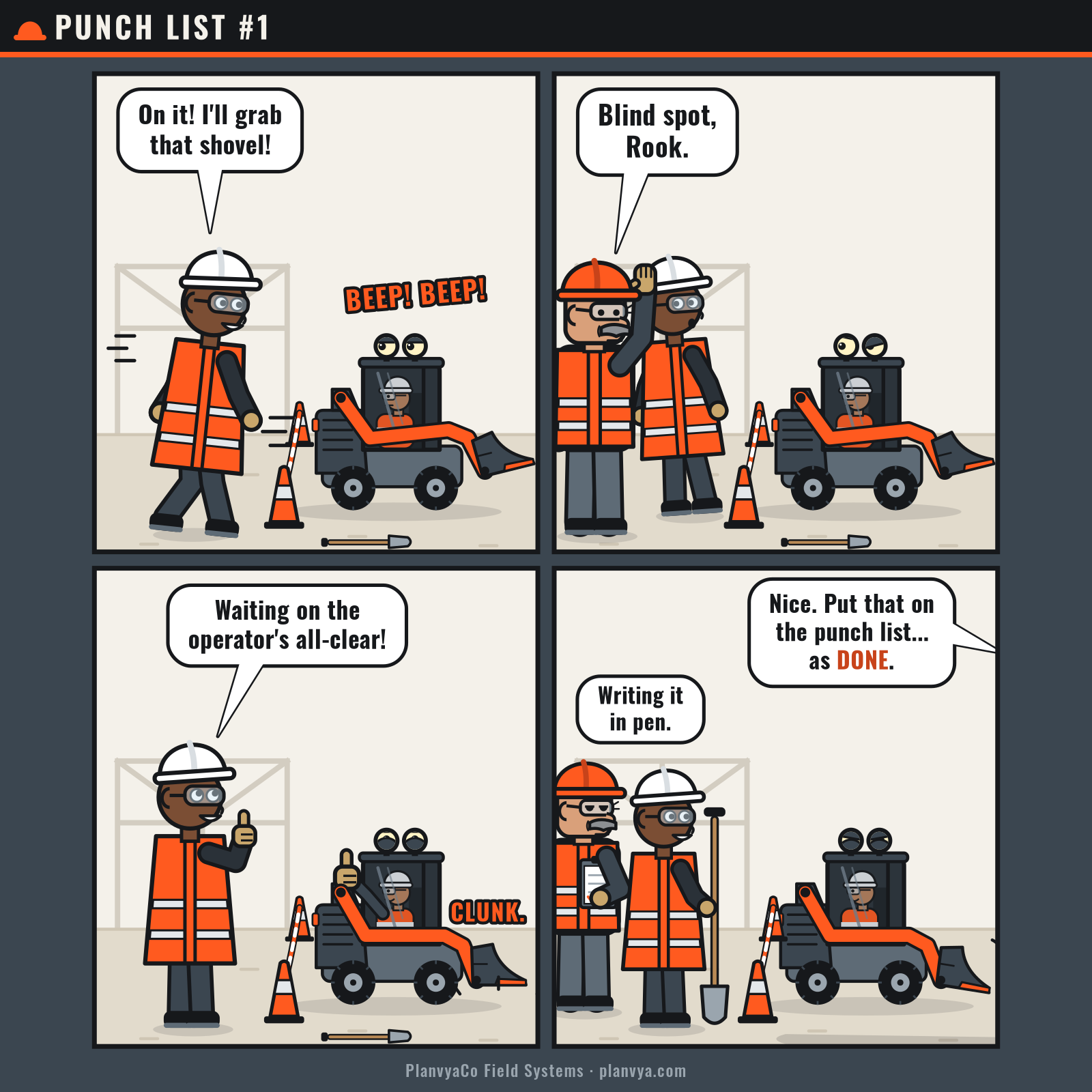
Monday Morning Comics
The Week's Headlines
The live headline roundup runs on the current Field Edition. This page keeps the feature, the Safety Corner and the comic from Issue No. 1.
Back Issues
Email edition coming soon
This paper by email once a week. Signup isn't open yet, so there's nothing to fill in.
Coming soon